


Hey everybody, welcome back to PMF 🔥
Sponsor Product Market Fit & get your product in front of thousands of founders worldwide? Reach out to g@guillermoflor.com
Trending right now: The Data Room Template VCs love, 27 Most Promising AI Startup Pitch Decks Backed by Top Investors in 2025
While yesterday Lovable took over the timeline, this week Glean also achieved a massive acomplishment: they reached $200M ARR in only 9 months since reaching $100M ARR.
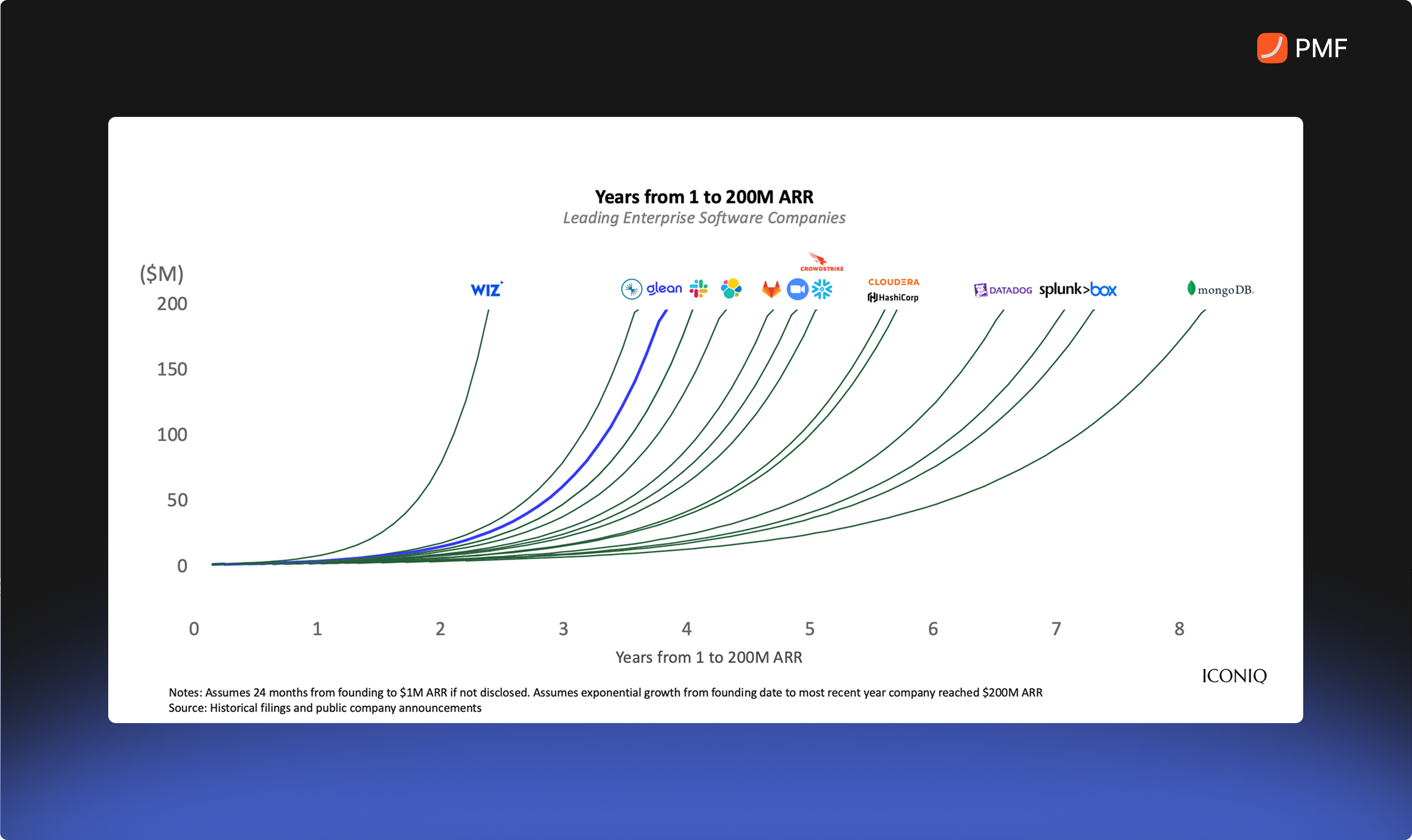
What’s super interesting about this, beyond the obvious massive and fast revenue growth, is that they are one of the few companies that are being successful with enterprise AI.
Most enterprise GenAI efforts still don’t move the needle. A recent MIT-backed report found ~95% of GenAI initiatives show no measurable impact on business outcomes. The problem isn’t the models. It’s integration, governance, and workflow adoption
Now, if you’re reading this you must be thinking: what’s in it for me?
Well, Glean achieved $200M ARR selling enterprise AI with to more than 5 different industries and 6 different use cases.
So, I decided to break Glean down and give so you can choose one of these and build a +$10M ARR Enterprise AI.
What it includes:
The AI Retail Playbook
The AI Higher Industry Playbook
The AI Healthcare Playbook
The AI Financial Services Playbook
The Enterprise AI Blueprint: 4 +$50M ARR Businesses You Can Copy From Glean

The problems:
Retail looks simple from the outside: sell products.
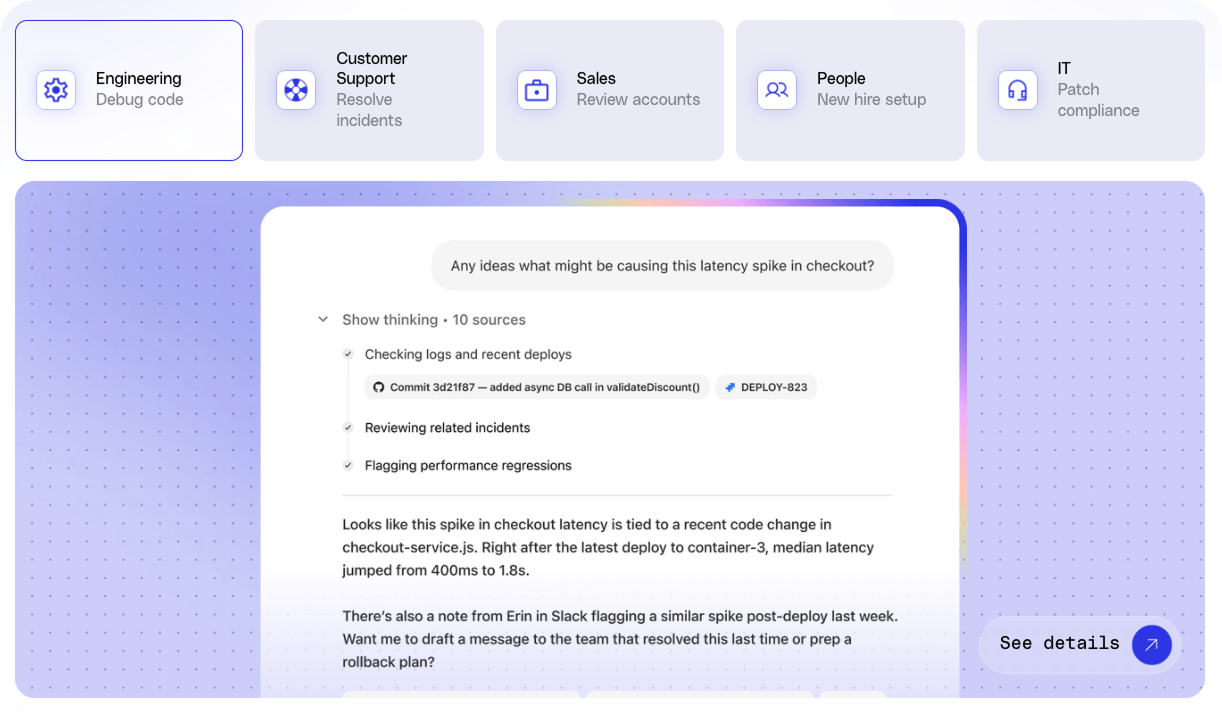
Inside, it’s chaos: omnichannel customers, fragmented systems, high turnover, and a constant need to move fast. Glean’s own framing for retail is basically: connect the tools, make the knowledge usable, and remove the “tool switching tax.”
So retail’s core problem is not “AI content”.
It’s knowledge fragmentation at massive scale.
The exact types of retail companies to target:
Pick one, because each has different systems and pain:
Omnichannel specialty retail (app + stores): fashion, electronics, cosmetics, sports retail (Zara, H&M, Uniqlo, Mango, Best Buy, MediaMarkt, Fnack, Currys, Sephora, Decathlon, Foot Locker)
Big box / grocery: huge supply chain + store operations complexity (Waltmart, Costco, Target, Tesco, Carrefour)
DTC brands that became omnichannel: started Shopify, now have stores and call center
Marketplaces: more complexity in catalog, seller operations, fraud (Amazon, eBay, Etsy, Rakuteen, Mercadolibre)
Who feels the pain daily
Customer support teams
Store associates
Store managers
Marketing and advertising teams
Merchandising teams
Supply chain and logistics teams
Engineering/product teams (context-switching hell)
The use cases:
1) Transform customer service experience
e
Problem: customers want instant, consistent answers (returns, shipping, warranty, order changes). Agents waste time searching policies and order context.
What the AI does
Gives step-by-step resolution paths (refund vs exchange vs store credit)
Pulls order + customer context
Drafts the response
Suggests upsell (accessories, bundles) when relevant
Users
Customer support reps
Store associates helping customers in store
Store managers approving exceptions
2) Deliver on omnichannel
Problem: “omnichannel” isn’t a strategy anymore. It’s table stakes. Customers buy across store, web, app, social, then complain via support.
What the AI does
Builds a customer 360 view (purchase history, browsing, loyalty, support tickets)
Keeps product info consistent across channels
Helps staff answer: “Do we have it in stock?” “Can I return online in store?” “Where is my order?”
Users
Store associates + customer service reps
Marketing teams (campaign decisions using cross-channel insights)
3) Transform employee experience (onboarding + training)
Problem: seasonal hiring + turnover. New associates are slow, mistakes are expensive, training doesn’t scale.
What the AI does
“Ask anything” onboarding inside chat
Instant product knowledge and process lookup
Self-serve HR/compliance questions (vacation, safety policies)
Users
Seasonal employees
HR business partners
Store managers
4) Innovate faster
Problem: retail needs fast experimentation (pricing, promotions, assortment, new channels). Teams spend forever hunting context.
What the AI does
Merch teams run agents that summarize trends and consumer shifts
Engineers find prior decisions, docs, tickets, code context faster
Faster project ramp-up and fewer repeated mistakes
Users
Merchandising team
Engineering/product teams
5) Optimize operational efficiency and visibility
Problem: inventory, pricing, supplier contracts, logistics are complex, and legacy systems slow everything down.
What the AI does
Summarizes inventory + pricing data for faster decisions
Pulls insights from supplier contracts and reports
Helps teams search across structured + unstructured ops data (emails, warehouse records, reports)
Users
Retail ops staff
Supply chain and logistics teams


The problem
Higher education is basically a service business with:
A complex “customer journey” (prospect → applicant → enrolled → graduated → alumni)
A ton of rules (financial aid, visa, grading policies, accreditation, privacy)
Lots of stakeholders (students, faculty, staff, parents)
Old systems (SIS, LMS, HR, finance, helpdesk)
The daily pain is:
Students asking the same questions 1,000 times
Staff hunting for the “latest policy” in PDFs, drives, emails
Admin processes that require strict accuracy
The exact types of higher-ed orgs to target
Large universities (many departments, huge support volume)
Community colleges (high support load, lean staff)
Online-first schools (support + onboarding is everything)
Private universities (care about student experience and retention metrics)
Who feels the pain daily
Admissions + enrollment
Financial aid office
Registrar
Student services + advising
IT helpdesk
Faculty support
HR + compliance teams
The use cases
1) Student support deflection (the big one)
What students ask all day
“How do I register?”
“When is the deadline?”
“What forms do I need?”
“How do I change my schedule?”
“What’s the financial aid status?”
