Building something is no longer the hard part. AI takes you from an idea to a working product in a weekend.
Finding the first customers is still brutal. And they’re the ones who matter most, because the earliest users are the only ones who:
tell you whether the problem is real before you’ve spent a year building for no one
give you the feedback that actually shapes the product, not the polite kind
become the references and case studies that make the next ten easier to win
This week a repo went viral on X for taking a swing at exactly that.
It’s a Codex skill: you hand it your startup URL (or other info), it defines your ideal customer, reads public discussions for real pain and buying signals, qualifies each prospect with the source linked as evidence and drafts an opener.
So instead of trusting the demo, we ran an experiment. We made up a startup, an AI that chases down unpaid invoices for small businesses and freelancers, and gave the skill nothing to work with but that one sentence.
Then we let it loose in deep mode and watched what came back. And this is the final result (pretty crazy):
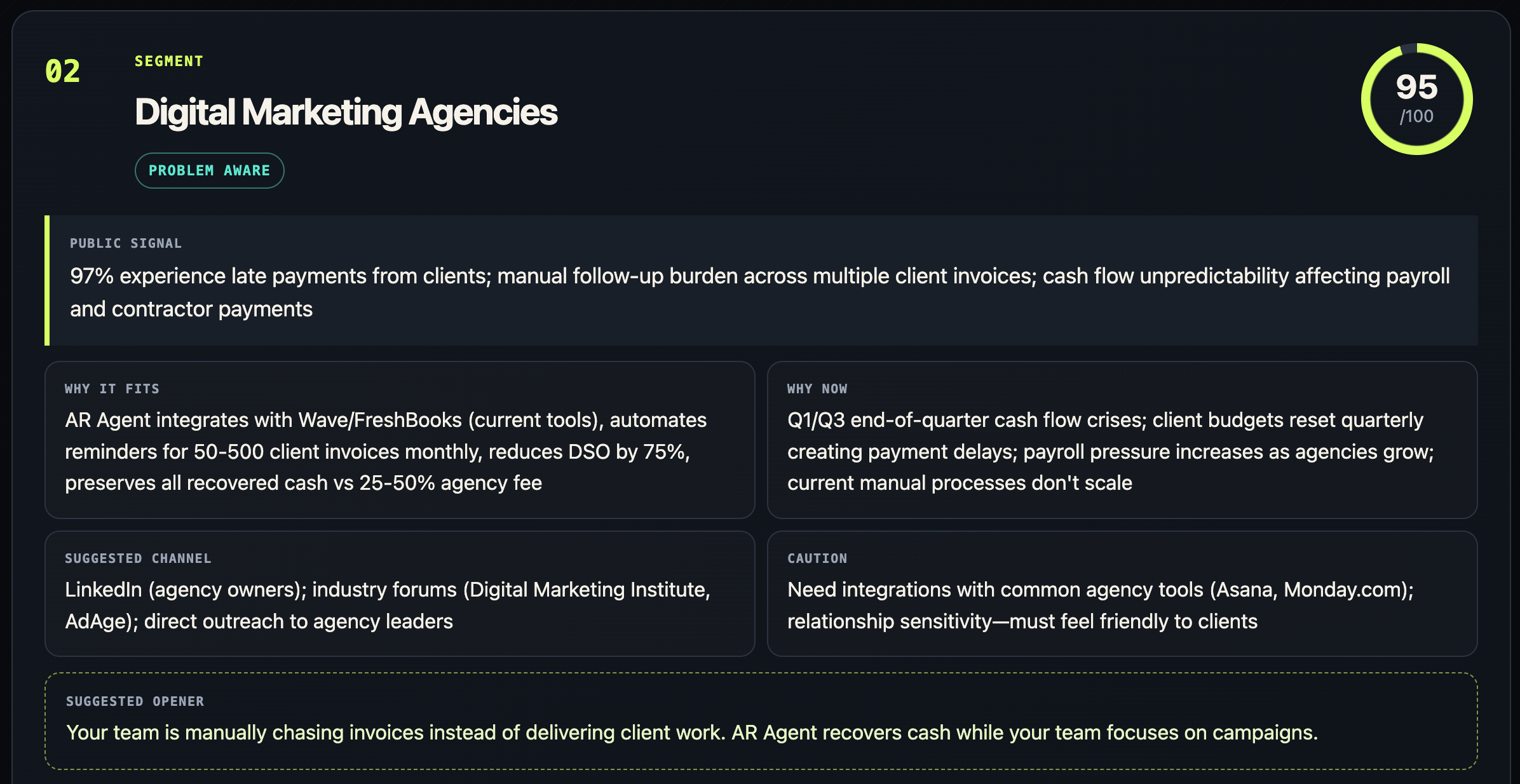
What comes back is a full report: an early-customer verdict, your ideal ICP, an evidence-backed shortlist of prospects with the public pain and buying signal behind each one, the patterns that repeat across them, a personalized opener per prospect, and a seven-day outreach plan."
In this issue we go deep on the parts that make it actually usable:
how to install it, in Claude and not just Codex
the six modes and when to reach for each
what the tool did with just an idea, the real run, unfiltered
how to schedule it so it works for you every day, dropping new prospects into an outreach queue you actually work
Inside you will find:
What the Skill Actually Does
How to Install It in Claude in Two Minutes
Which Mode to Use for Which Job
Putting the Skill to the Test
How to Turn It Into a Morning Radar
From Report to an Outreach Queue You’ll Actually Work
Launch your site faster than ever with Framer - now with Agents that make every part of your workflow effortless
Framer is the pro website builder for creators, teams, and businesses that care enough to get every detail right. Now with Agents that work alongside you across the full website workflow: designing new pages, managing your CMS, editing content, and adding SEO all without leaving the tool where the real site lives. Trusted by teams at companies like Miro and Perplexity.
Agents bring speed and scale; you bring taste, judgment, and control. Together you can:
Build and iterate faster: generate sections, refine layout and styling, and ship updates in minutes.
Scale content with confidence: update CMS collections, localize copy, and keep metadata consistent across pages.
Stay production‑ready: reviewable changes, collaboration, and safeguards that help teams ship without handoffs.
1. What the Skill Actually Does
Under the branding, it’s a disciplined research pipeline with a hard rule at the end.
1. It reads your product. It inspects the URL, the landing-page copy and the repository if you point it at one (or whatever describes your startup), then writes a brief: what you sell, the outcome you promise, who the user is, who actually pays, the urgent job, the current workaround, the trigger that makes someone start looking, and the disqualifiers. This brief is the filter for everything after it.
2. It searches five buckets, instead of hammering one query:
Explicit demand: people literally asking for a tool or an alternative
Pain: posts describing the problem as slow, manual, or infuriating
Workaround: the spreadsheets and copy-paste rituals people build when no product fits
Switching: cancellations, migration complaints, and missing-feature gripes aimed at a competitor
Timing: public events like a launch, a hire, or an expansion that make your product relevant this month
3. It scores every prospect on five dimensions, and the weights tell you what it cares about:
Pain strength (25%)
Product fit (25%)
Timing (20%)
Public reachability (15%)
Evidence quality (15%)
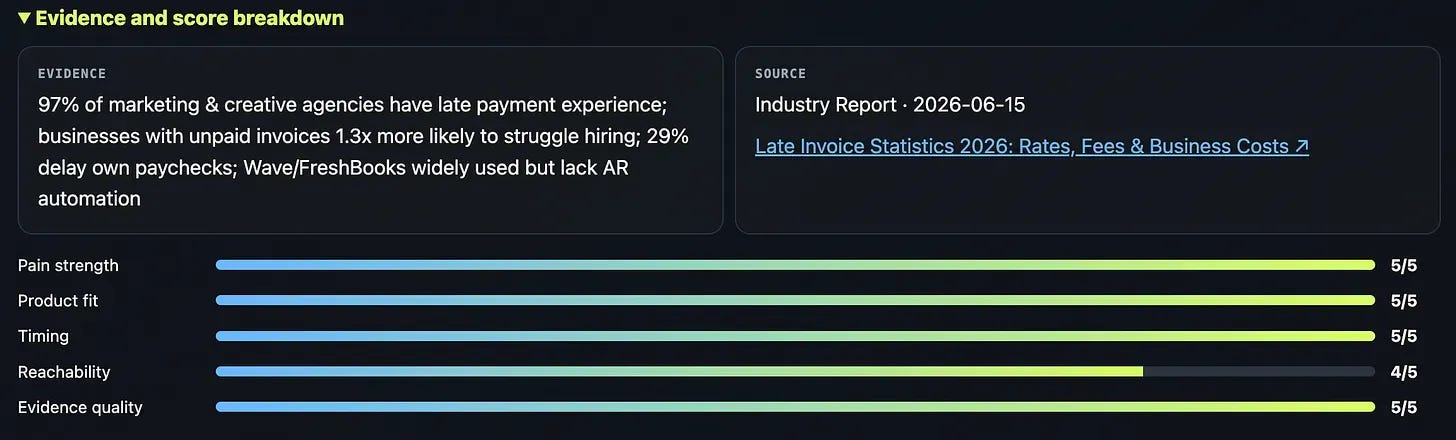
A prospect with no cited pain or timing signal never makes the primary shortlist, no matter how well it fits on paper.
4. It labels and drafts. Each prospect gets a stage, from high intent down to potential fit, plus one short opener that references the specific public context and nothing invented
This issue is available exclusively to paid subscribers!
Paid subscribers unlock the full library: 200+ decks, 10,000+ investors, AI Agent playbooks, and fresh high-signal content every week.
Here’s a good place to start:
🤖 AI Agent Templates
↳ The McKinsey Slide Playbook for Claude — how to build consulting-grade presentations in minutes.
📈 Startup Playbooks
↳ The AI Founders Playbook — lessons from Sequoia, OpenAI, Nvidia, and LangChain on building AI startups from zero.
🎯 The Deck Library
↳ 27 Most Promising AI Startup Pitch Decks Backed by Top Investors — the best-funded AI startups of 2025, slide by slide.
💰 Investor Database & Tools
↳ The Family Office List — 1,000 family offices actively writing cheques. Used by 5,000+ founders raising their round.
Not subscribed yet? Try it free for 7 days and unlock this guide, plus our full premium library:
We’re already 70,000+ founders and operators inside!
2. How to Install It in Claude in Two Minutes