


Everyone is using AI.
But if you pay attention, most people are still using it in a very narrow way. They open ChatGPT or Claude, type a request, and wait for something usable to come back.
“Write this”
”Analyze that”
”Give me ideas”
It works. It feels fast. Sometimes it even feels like leverage.
But after a while, something starts to flatten out. The outputs are fine, often clean, occasionally polished—but they rarely feel like they move the needle.
They don’t change how you think about the problem. They don’t lead to better decisions.
That’s not really a limitation of the models.
It’s more about how little happens before the answer.
The shift most people haven’t noticed yet
There’s a shift happening in how these systems are meant to be used.
It’s not loud. It’s not packaged as a feature. But if you look at how both OpenAI and Anthropic talk about their tools, it’s there.
Less “ask and get an answer” and more “work through a problem with the model”.

One of the simplest ways to move in that direction is something called Socratic Prompting.
The idea is straightforward, but the effect is disproportionate.
Instead of asking the model to produce something immediately, you slow the interaction down just enough to think first. You guide the model through a series of questions that clarify what you’re actually trying to do, surface the assumptions you’re making, and explore alternatives before any answer is given.
Take something simple.
You could ask:
“Write a newsletter about AI agents”
And you’ll get something reasonable.
Or you could take a slightly different path:
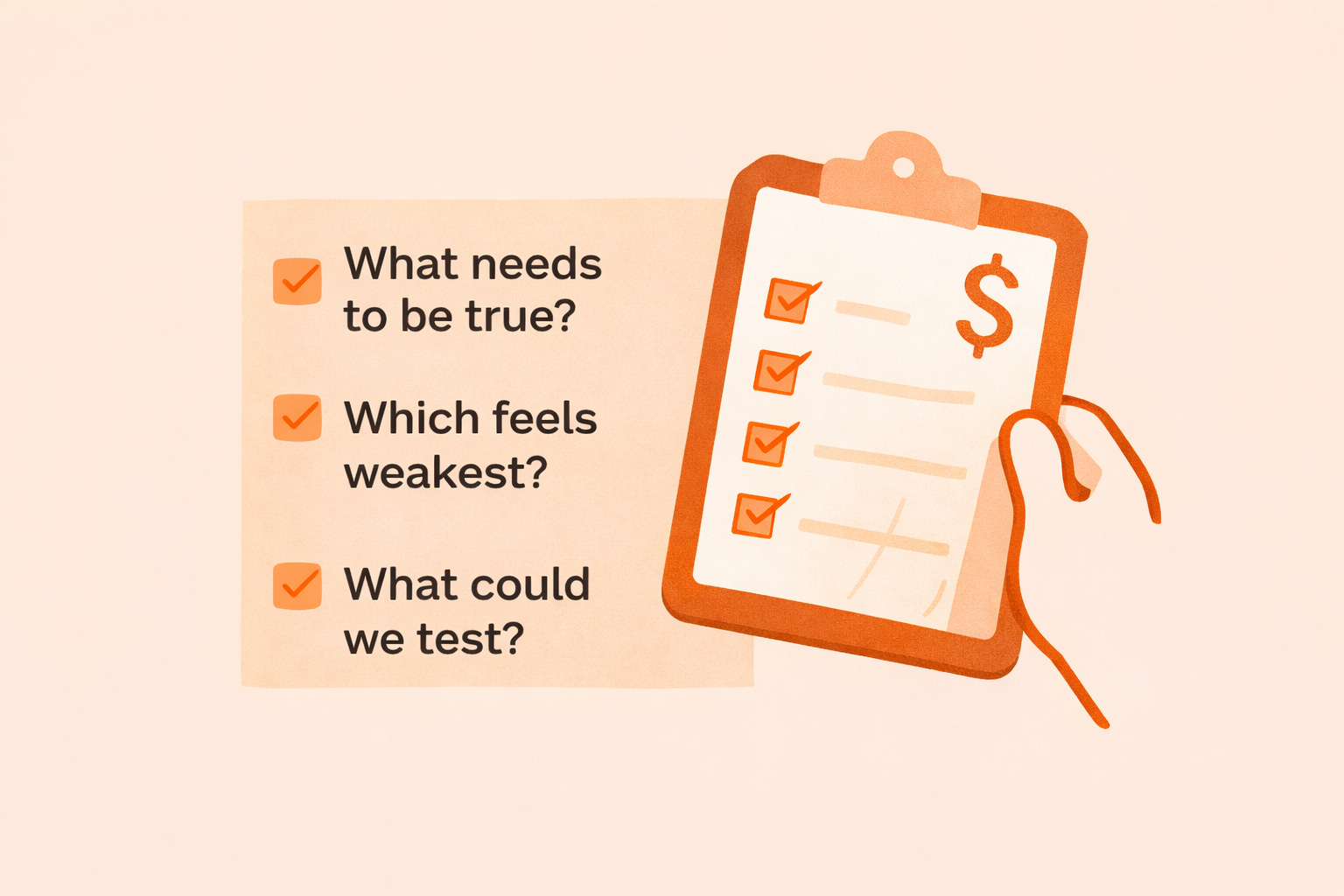
“Before writing anything, help me think this through.
What assumptions am I making about AI agents?
What feels overhyped right now?
And where could there be a more interesting angle that people aren’t exploring enough?”
Nothing about the model changes.
But the conversation does. And once the conversation changes, what comes out at the end tends to be very different.
Why this works (and why it’s not just a trend)
At first glance, Socratic Prompting can look like another “prompt trick” circulating online. It isn’t.
There are 3 solid reasons why this approach consistently produces better results:
It builds on the Socratic method, a well-established approach in philosophy and education designed to improve reasoning by exposing hidden assumptions and refining questions rather than jumping to conclusions
it aligns with how modern language models actually perform best. Research and practical experimentation have shown that LLMs generate more reliable and nuanced outputs when guided through structured reasoning processes
it reflects where the industry itself is heading. Both OpenAI and Anthropic are increasingly emphasizing structured interaction, iterative reasoning, and context design over one-shot prompts.
In this guide, we will cover:
When Socratic Prompting is actually useful (and when it isn’t)
The core framework behind it
A small detail that changes the interaction
Where this actually matters for founders
A set of 25 Socratic prompts you can immediately reuse
Everything below is practical:
exact frameworks
reusable prompts
real applications
From here on, this is for paid subscribers.
If you want access to the full framework, templates, and prompts, you can subscribe below.
