


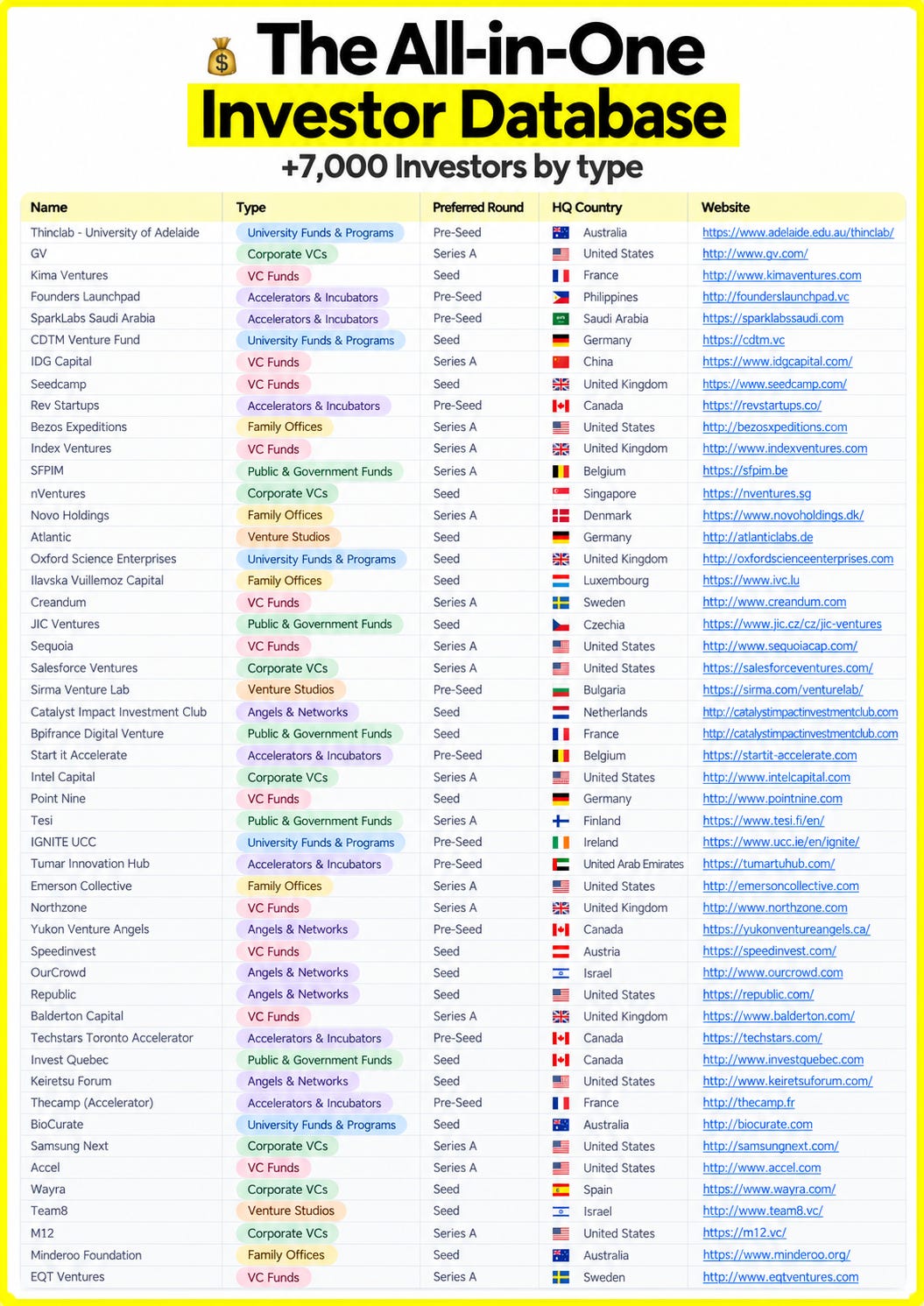
Of the +3,200 Pre-Seed investors in our database, more than 2,000 are accelerators and incubators. Only 545 are venture funds.
Most founders raising a first round don’t know this. They build a list of famous VCs, send the same deck to all of them, and wait.
The problem is that “investor” covers very different people:
A fund that has to return 3x to its own investors
A corporate that wants a partner for its product roadmap
A family that invests its own money on its own timeline
A program that gives you a small cheque in exchange for a cohort and a demo day
Each one decides in its own way, writes a different cheque and asks for different things.
So we took our full database of +7,000 investors and sorted every single one by type.
Why You Need It
Filtering by stage only tells you if an investor can write the cheque. How they decide depends on what kind of investor they are.
A corporate VC will ask how your product fits their business
A family office wants to know who you are and whether you’ll still be around in ten years
An accelerator will look at the team and the speed of execution, and barely at the numbers.
Send the same pitch to all three and it won’t work.
Knowing the type also tells you what to expect after the yes:
A government fund comes with paperwork and reporting
A venture studio wants a big share of the company because it helped build it
An angel network can take months to move, then close the round in a single evening.
The better you understand who is on the other side of the table, the fewer meetings you waste.
The Full Map

The database contains +7,000 investors from Pre-Seed to Series A, organized into 8 tabs, one per type.
Each entry includes:
name
type
preferred round
headquarters country and city
website
key people
Here is what you’ll find in each tab:
VC Funds: +3,000 Investors
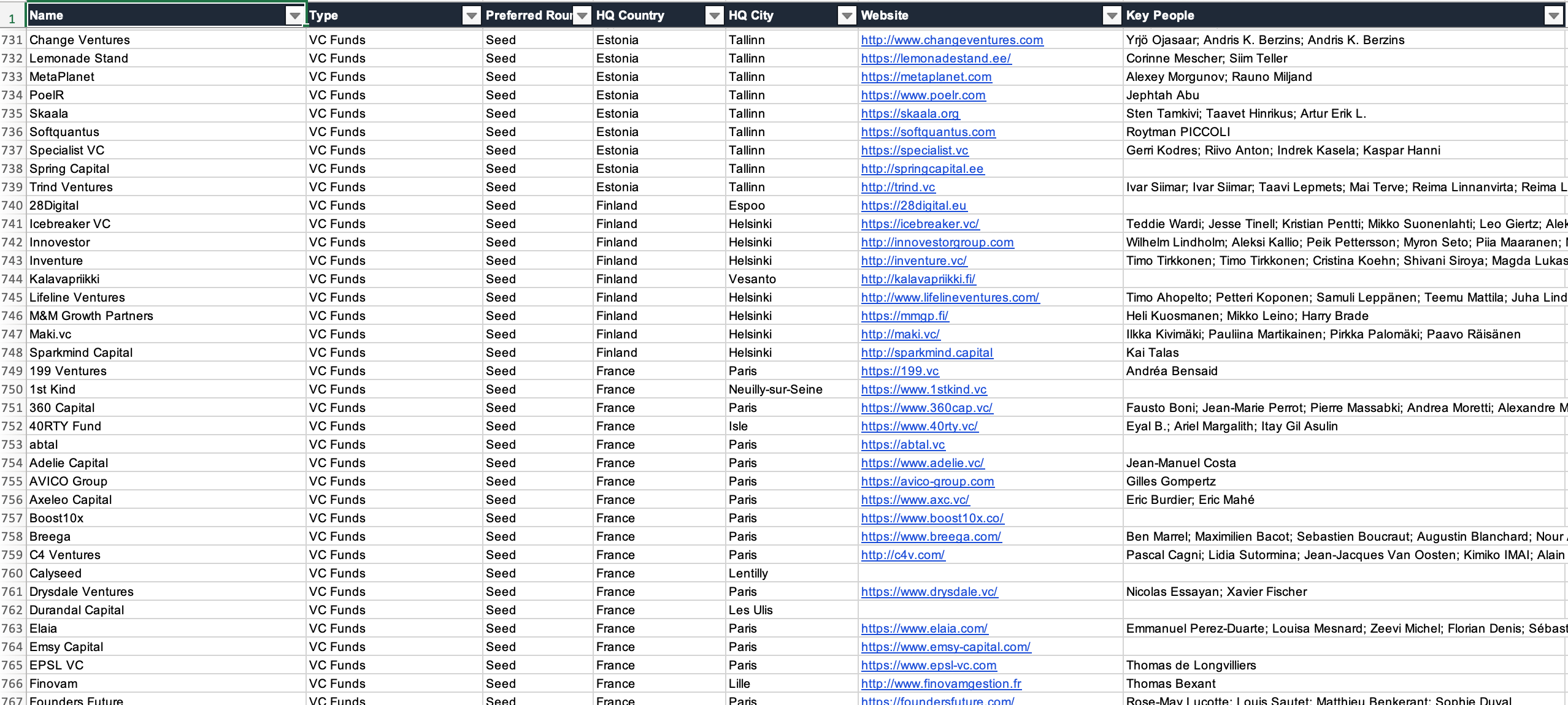
The largest group, and the one founders already know. It includes everything from micro funds and solo GPs to firms like Sequoia, Index Ventures, Accel, Balderton and Creandum.
They dominate Seed (2,032 of 2,957 investors) and Series A (470 of 615).
A VC invests other people’s money, so every deal has to be able to return the fund. The main question behind every meeting is whether your company can become very large.
Lead with the size of the market and the speed of your traction. Find the right partner in the key people column before you write: a cold email to the partner who covers your sector beats a generic contact form.
Accelerators & Incubators: +2,000 Investors
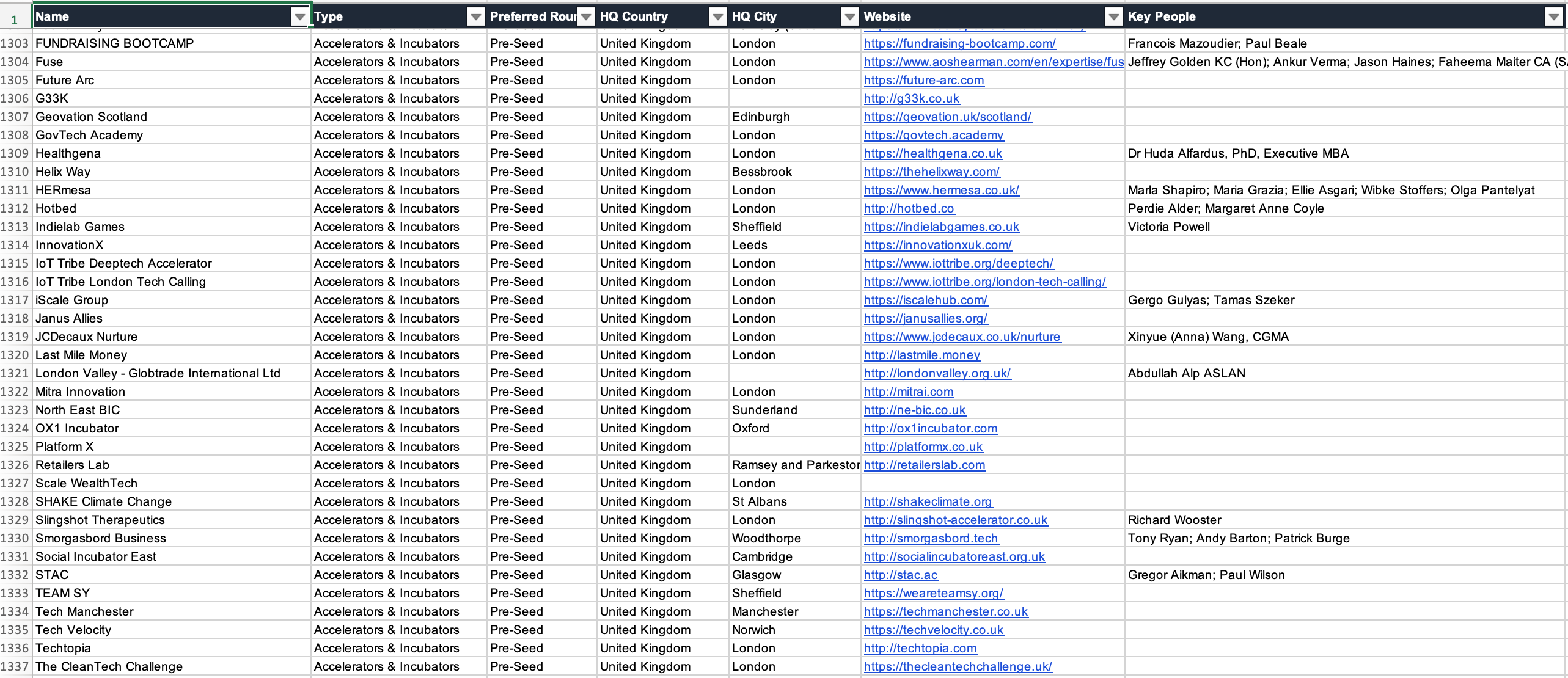
Almost all of them sit at Pre-Seed (2,017). Techstars, Plug and Play, Founder Institute and Antler are in here, along with hundreds of local programs.
They usually invest a small amount for a slice of equity, then give you a cohort, mentors and a demo day in front of investors.
Applications are open and they judge the team first. Apply to several at once and pick the one whose network matches your market.
Family Offices: +400 Investors
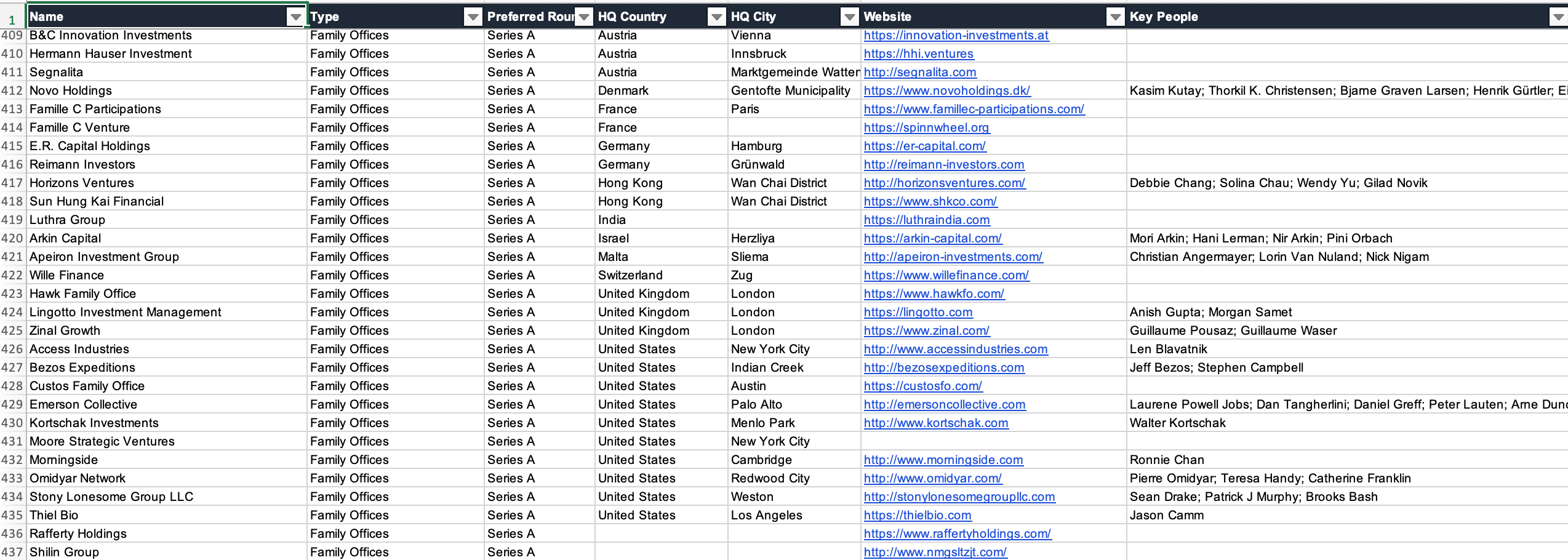
Families and wealthy individuals investing their own money: Bezos Expeditions, Emerson Collective, Novo Holdings, Otium Capital and hundreds of smaller offices.
Most of them come in at Seed (372). This tab also holds private holding companies, which is how many German angels invest (through a GmbH), so the German list is long.
With no fund cycle, they can wait longer for a return and often follow on in later rounds. They decide slowly and rarely answer a deck blast.
A warm introduction works best, and so does a story that connects your company to the family’s own business or interests.
Corporate VCs: +380 Investors
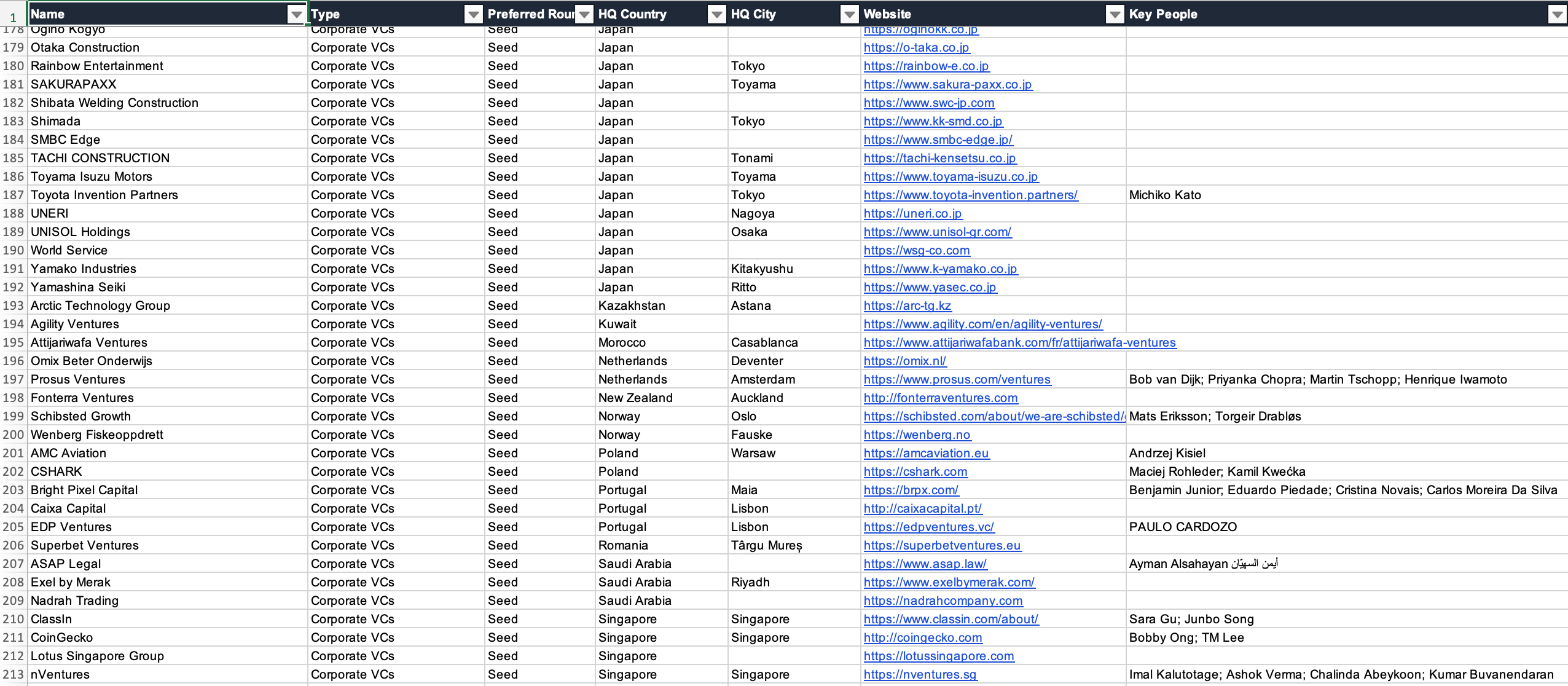
The venture arms of operating companies: GV, M12, Intel Capital, Salesforce Ventures, Samsung Next and AbbVie Biotech Ventures, plus banks, telcos and insurers.
They matter most at Series A, where they make up 91 of the 615 investors.
A corporate invests for the return and for the strategy: a new product line, a supplier, a future acquisition. Show them how your product helps their business, and ask early whether the investment comes with a commercial deal or restrictions on who else you can sell to.
University Funds & Programs: +270 Investors
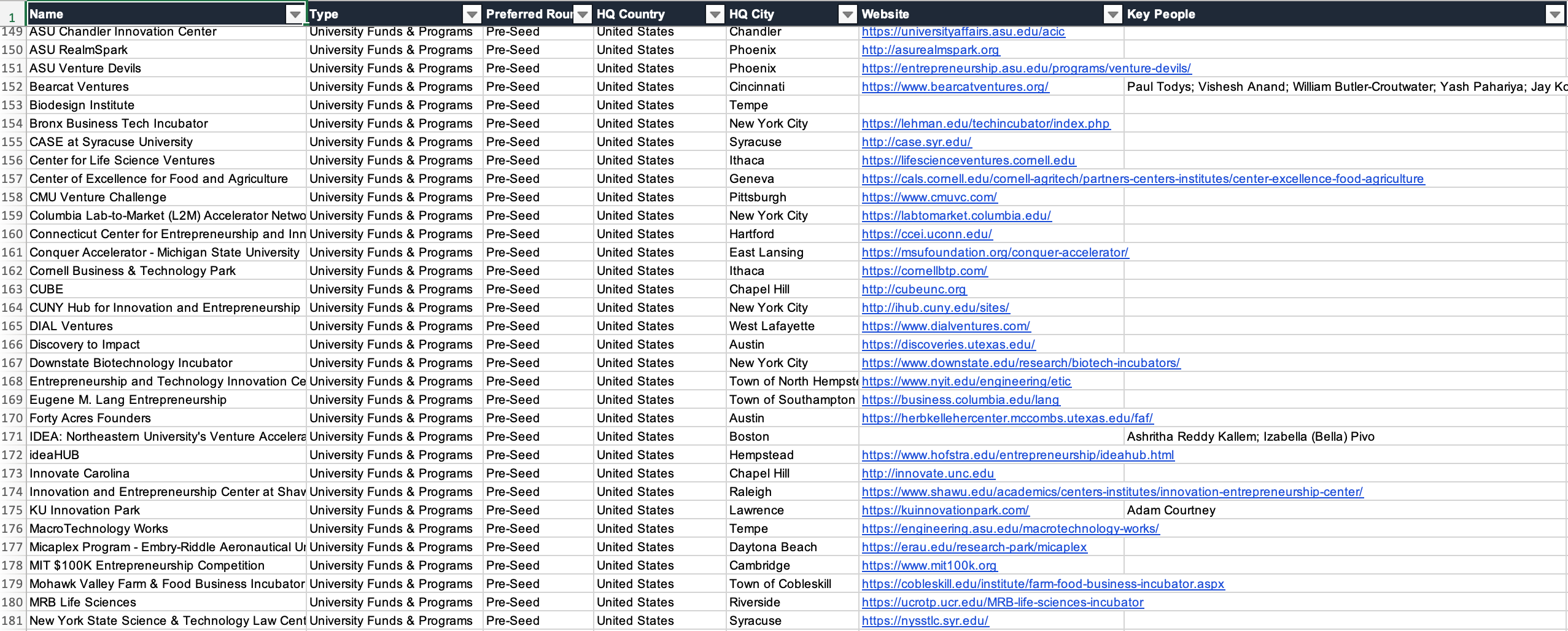
University-backed funds, incubators and alumni networks: Oxford Science Enterprises, Cambridge Enterprise, Imperial Enterprise Lab, CDTM and the MIT $100K competition among them.
Most of them (235) are at Pre-Seed.
The first filter is usually your connection to the university: you studied there, you work there, or your technology was born in one of its labs. If you have that link, start here.
These programs open doors to research, talent and grants that a normal fund can’t.
Public & Government Funds: +250 Investors
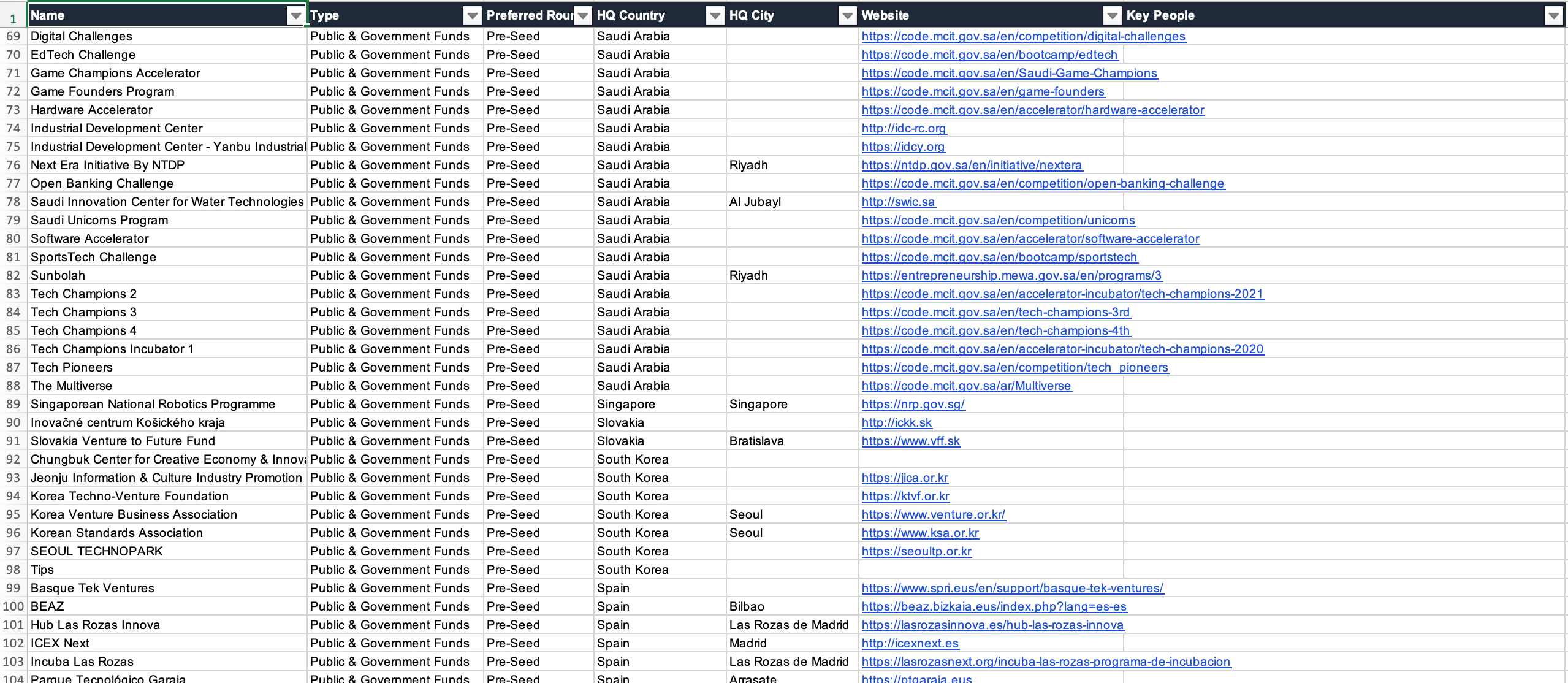
State, regional and development-bank money: Bpifrance, the UK Innovation & Science Seed Fund and dozens of regional funds across Europe, the Middle East and Asia.
Most are at Pre-Seed (156) and Seed (84).
They invest to grow the local economy, so being based in the right place (or willing to open an office there) counts as much as the product.
The money is often cheap and non-dilutive in part, but the process has forms, deadlines and reporting. Start early and pair them with private investors, who they often like to match.
Angels & Networks: +200 Investors
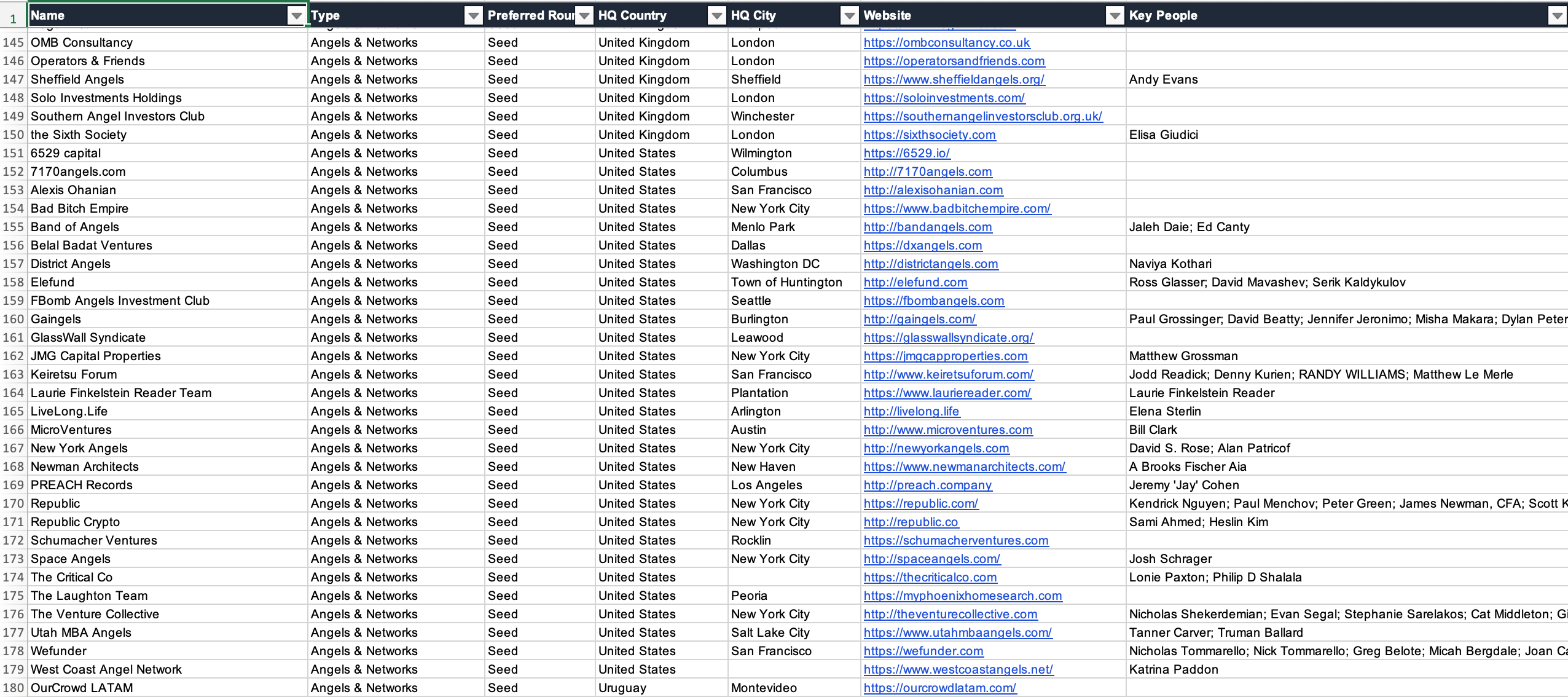
Individual angels, angel clubs and syndicates (Keiretsu Forum, Band of Angels, Business Angels Switzerland, Aligned Syndicate), plus equity crowdfunding platforms like Republic, Wefunder and OurCrowd.
They split between Pre-Seed (80) and Seed (122).
Angel networks run pitch events: you apply, get selected, pitch to a room and close with whoever says yes. It takes one champion inside the group to move everyone else. Crowdfunding platforms work best when you already have users or customers who want to own a piece of the company.
Venture Studios: +120 Investors
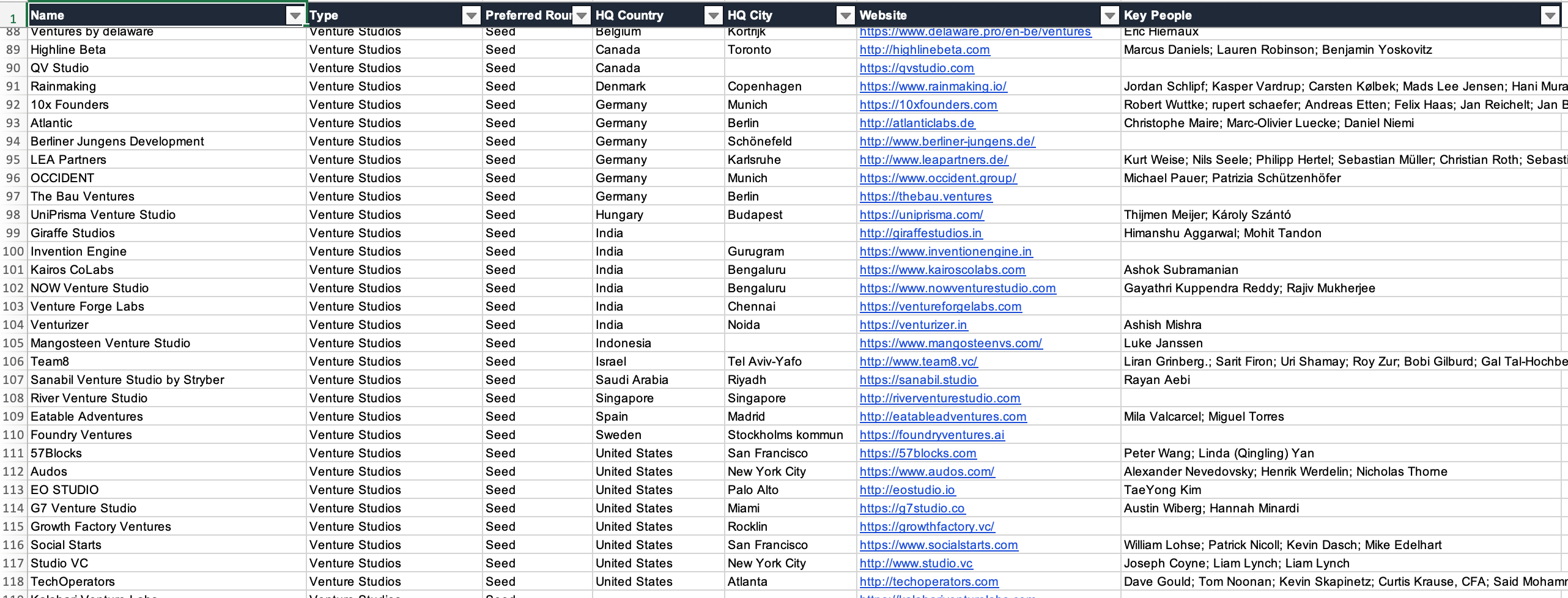
Studios and company builders that co-found startups with their own team and money, like Atlantic Labs and Swanlaab Venture Factory.
Most are at Pre-Seed (86).
A studio gives you a team, a process and capital from day one, in exchange for a large share of the company.
They fit best before you have a co-founder or a product. Read the terms carefully: a cap table that starts with a big studio stake can make your Seed round harder to raise.
👇 Get the All-in-One Investor Database 👇
There is still no shortcut to fundraising.
But you shouldn’t send the same pitch to a family office, a corporate and an accelerator and expect the same answer.
We’ve sorted all +7 investors by type and stage, so you can start from the right category, pick the right names and write to each one in the way they decide.
This issue is available exclusively to paid subscribers!
Paid subscribers unlock the full library: 200+ decks, 10,000+ investors, AI Agent playbooks, and fresh high-signal content every week.
Not subscribed yet? Try it free for 7 days and unlock this databse, plus our full premium library:
We’re already 80,000+ founders and operators inside!
👇 Here’s the full list
