


There’s a moment in Boris Cherny’s conversation with the Acquired podcast that most people skipped past.
He’s talking about his daily workflow. How he uses Claude Code. What his job actually looks like now. And almost offhand, he says it:
“I don’t prompt Claude anymore. I have loops running. They’re the ones prompting Claude and figuring out what to do. My job is to write loops.”
The person who built Anthropic’s coding agent doesn’t write prompts. He writes systems that prompt themselves.
That’s not a flex. It’s a signal. And if you’re still thinking about AI as a tool you talk to, you’re already one mental model behind.
(We embedded the full video below so you can watch it yourself!)
From prompts to loops: what actually changed (and why its so important to start now)
Most people use AI the same way they used Google. You have a question, you type it, you get an answer, you move on.
That’s the prompt era. Linear. Human-initiated. One shot at a time.
Boris operates differently. He has hundreds of Claude instances running in parallel right now, not waiting for him to ask something, but actively reading GitHub issues, scanning Twitter feedback, combing through Slack, and surfacing what to build next. He doesn’t review every output. The loop does.
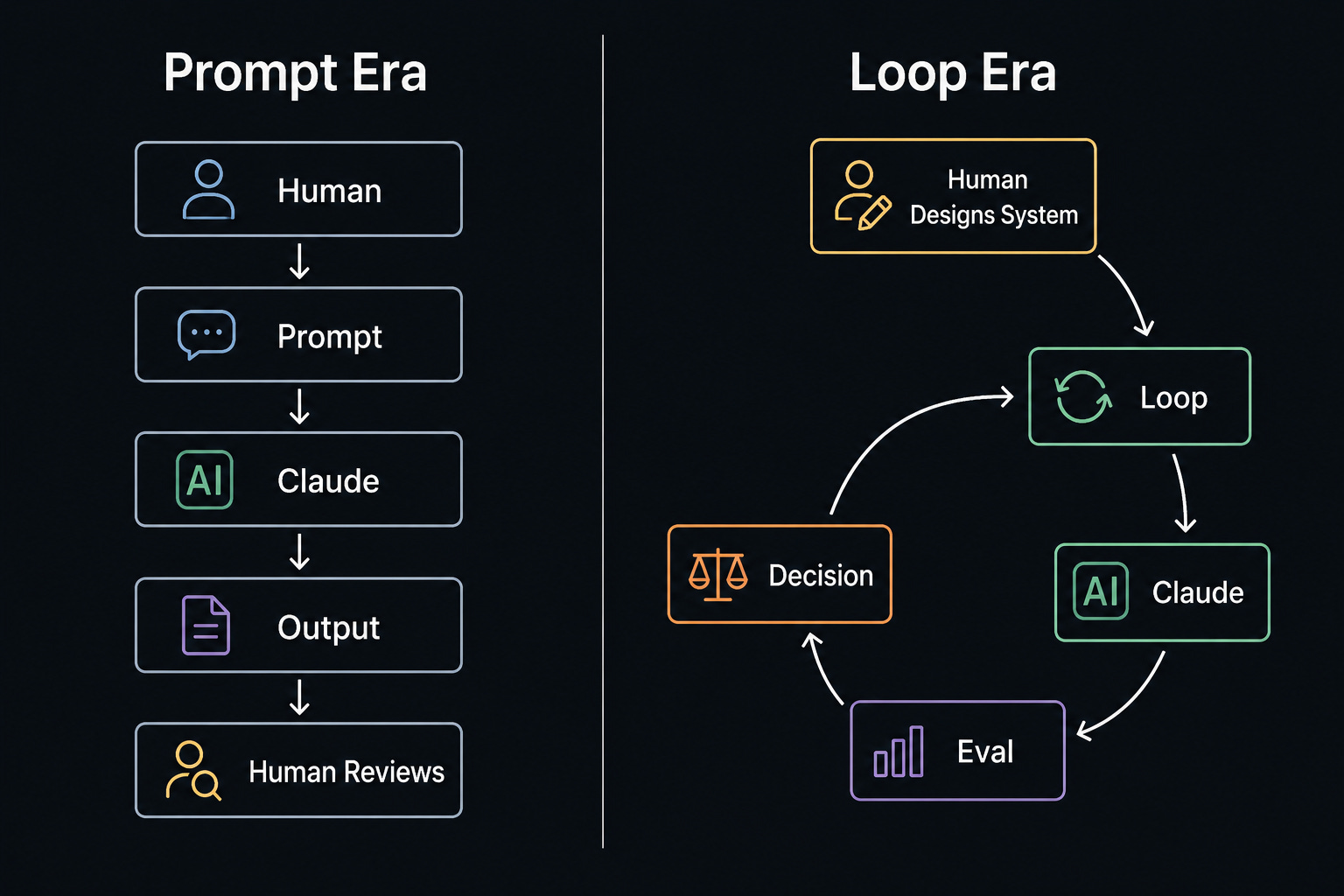
The shift is architectural. In the prompt era, the human is the connective tissue between every step. In the loop era, the human designs the system once and the system runs.
This isn’t about being lazy. It’s about operating at a different level of abstraction. Boris isn’t less involved in Claude Code’s direction — he’s more involved, because he’s shaping the systems that shape everything else.
The practical difference: a prompt gets you one output. A loop gets you a compounding operation.
The underfund principle
Here’s the most counterintuitive thing Boris said, and the most actionable for founders.
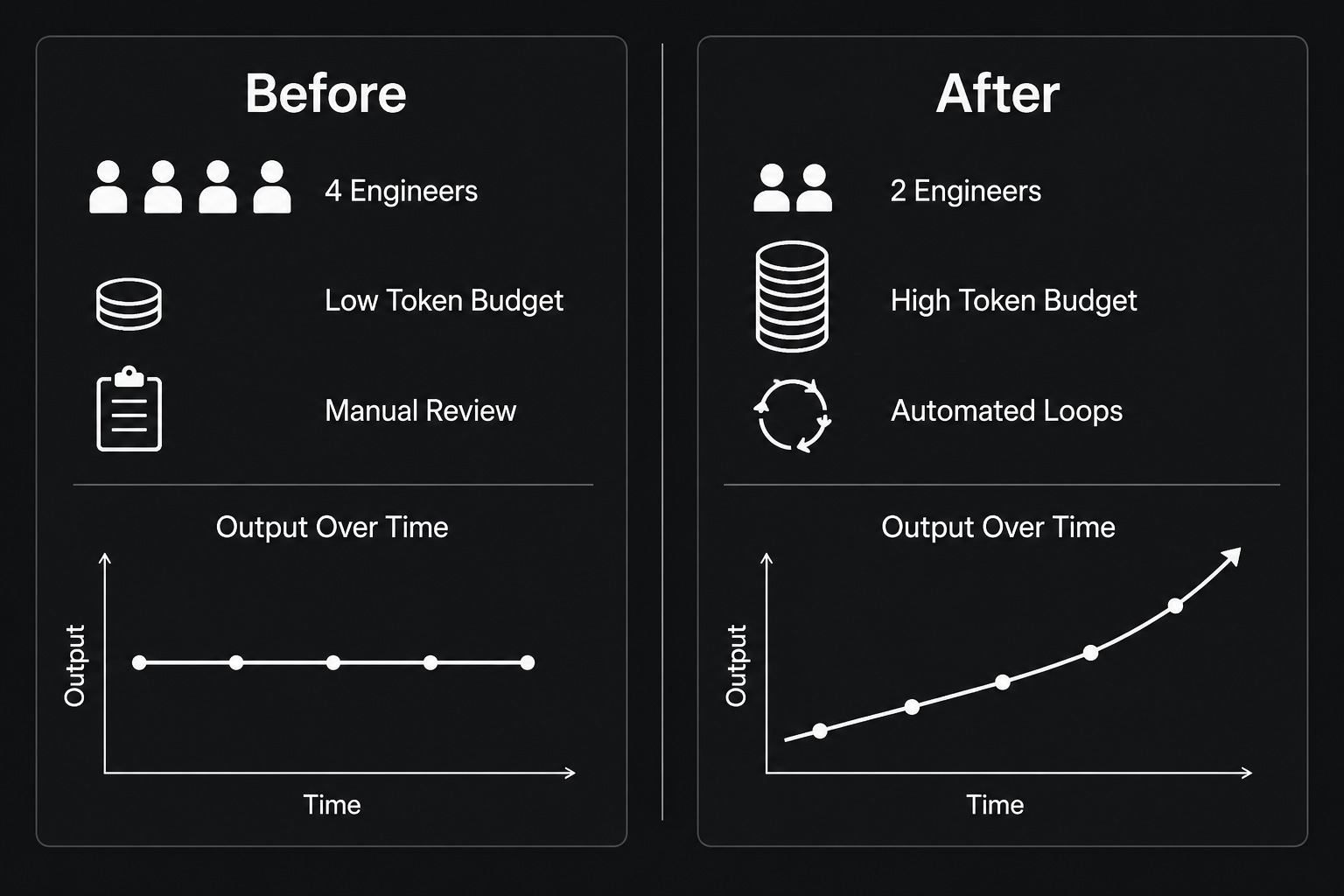
When someone on his team proposes a project that feels like a four-engineer job — he puts two engineers on it. On purpose.
Not because he’s cutting costs. Because the constraint forces the behavior he wants.
When you’re understaffed, you automate. You build loops instead of doing things manually. You figure out what Claude can handle so you don’t have to. And because you’ve automated it, the next time that task comes up, it’s cheaper, faster, and better.
His framing: shift budget from humans to tokens. Raise upfront investment, dramatically lower ongoing cost. The teams that do this compound. The ones that don’t are paying full price every time.
The practical implication for your org: look at your most repetitive workflows. The ones where someone is manually reviewing AI output, copy-pasting into another tool, making the same judgment call over and over. That’s where you put the constraint. That’s where the loop goes.
This Guide Will Show You:
HOW TO 100X YOUR OUTPUT WITH LOOPS 🔥
1: THIS IS WHAT YOU’RE DOING WRONG (and how to fix it)
2: Why your competitive edge has a 3-6 month expiration date
3: How to build your first loop like Claude Codes creator: A practical starting point
4: How to fully remove yourself from the workflow and let it run
This is where the real value is. The founders and builders who read this and act on it this week are going to be operating at a different level by next month. Upgrade to unlock it.