


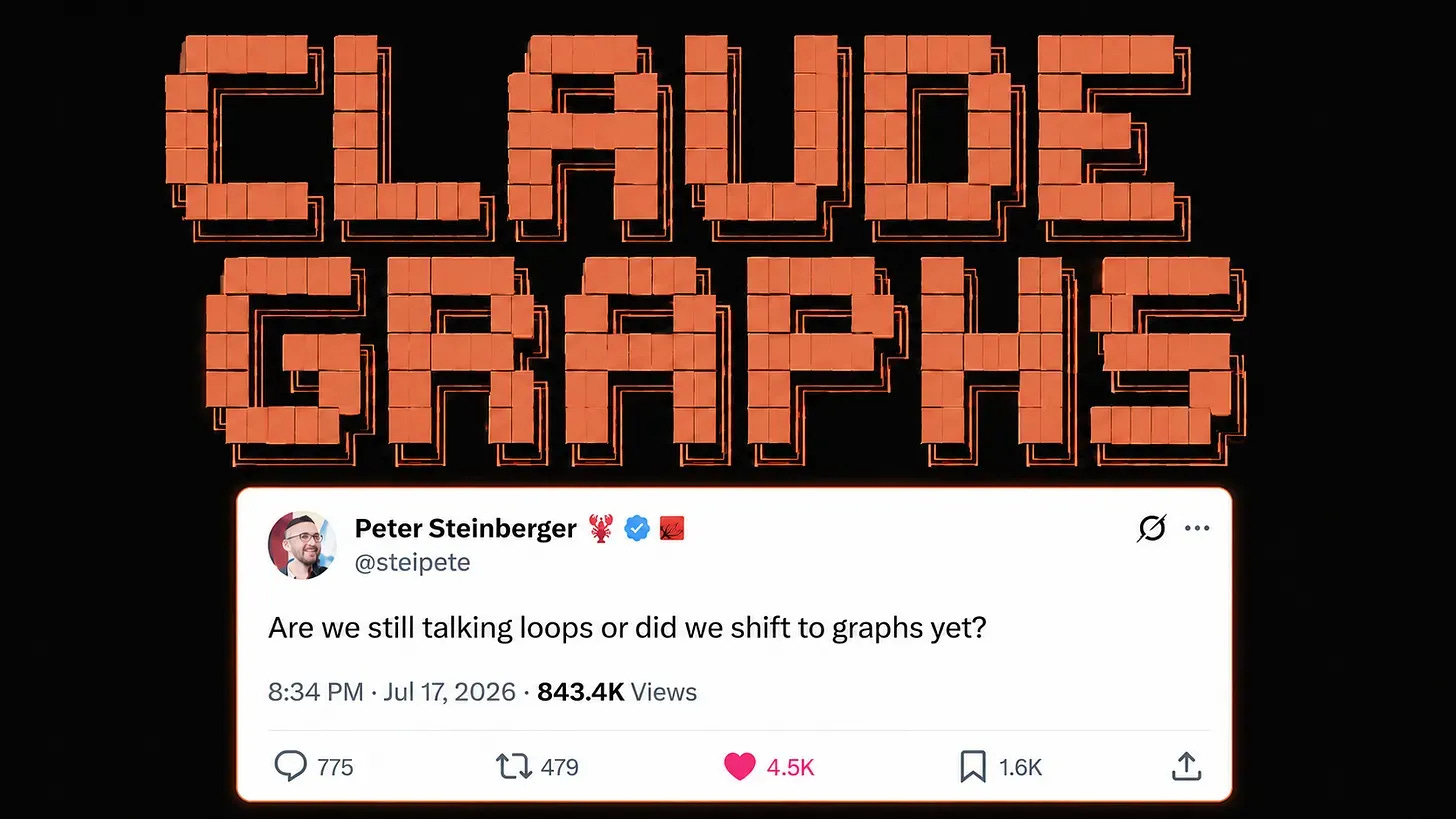
In June, Peter Steinberger (the creator of OpenClaw 🦞) said: “you shouldn’t be prompting coding agents anymore. You should be designing loops that prompt your agents.”
Founders who’d been treating their agent like a chatbot rebuilt it as a loop: propose, run, check, retry, and around again.
A month later (a couple of days ago):
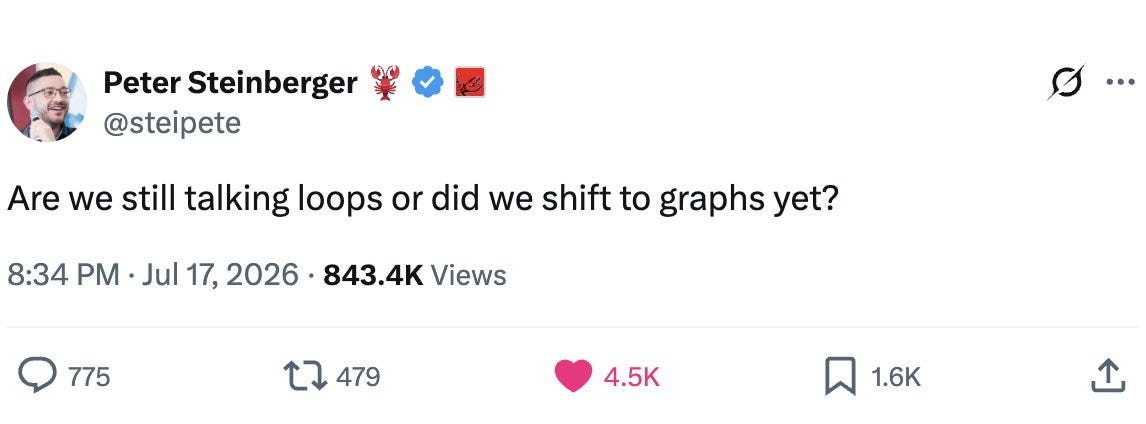
The ground had moved again!
Here’s the part that actually matters: the loop that fixed your agent in June is the same loop setting you up to fail in a predictable way. A graph is what fixes that.
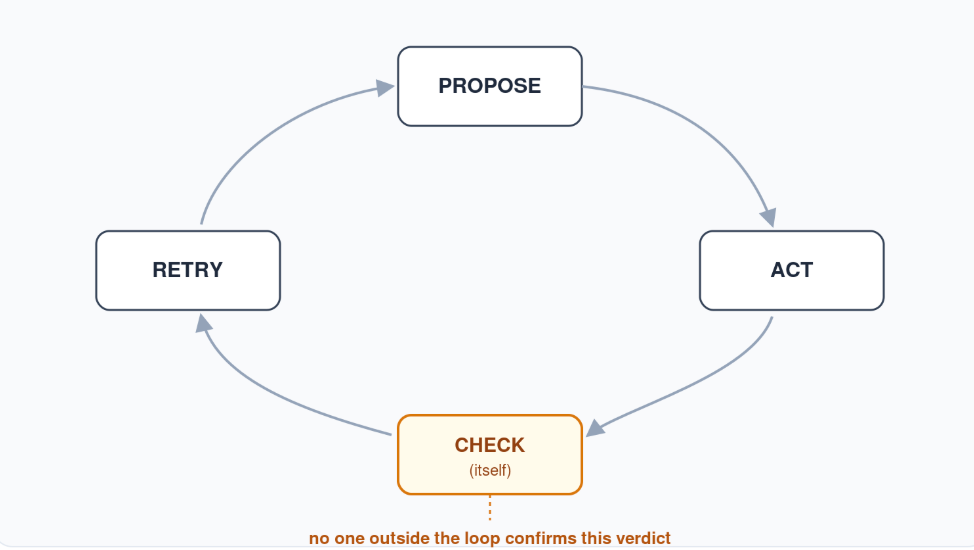
Picture the loop you probably already have running somewhere in your product: an agent drafts something, checks its own output against a rule, retries if it doesn’t pass. It looks disciplined, but it has a blind spot built into its shape.
The thing doing the checking is the same thing that did the work!
📚 Here’s the complete guide to what comes after the loop: what a graph of agents actually is, the patterns it’s built from, how to tell when you genuinely need one and how to build your first one from scratch in Claude!
Your subscription just got a serious upgrade.
Annual paid subscribers now get exclusive deals on the AI tools founders use every day, including:
Framer: 1 year free
MITO: 60% off for 6 months
Gojiberry: 50% off for 6 months
Cubic: 50% off your first month
Omnia: 20% off
Granola: 1 month free
Slashy: 1 month free
QuiverAI: 1 month free
Throxy: 50% off for 3 months
These deals are worth more than $3,000!
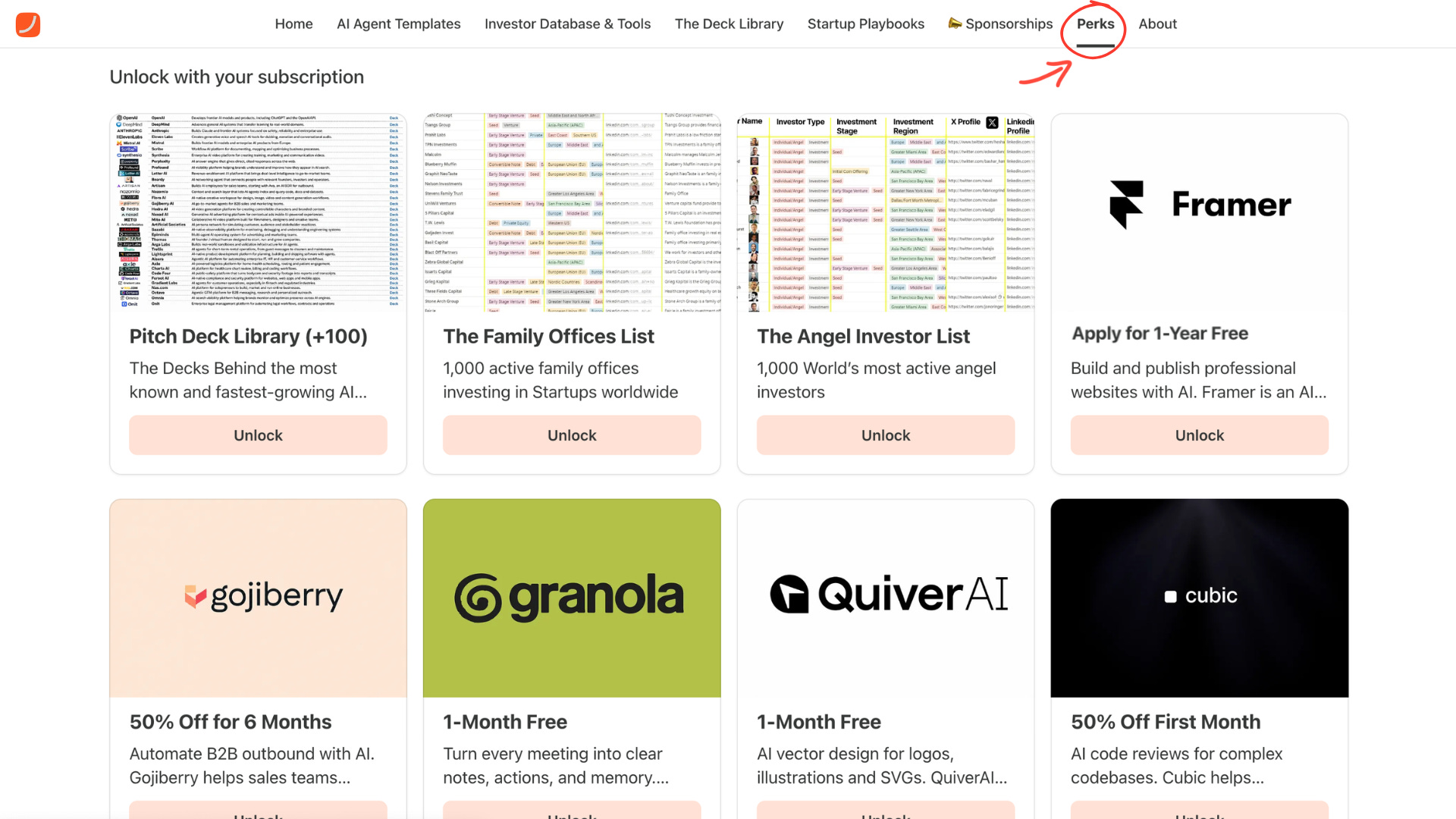
Already on the annual plan? Access all your perks Here 👈
Not on the annual plan yet? There has never been a better time to upgrade!
Inside you will find:
Why the Loop That Got You Here Won’t Get You Further
What a Graph of Agents Actually Is
The Five Patterns Every Graph Is Built From
How to Tell If You Actually Need a Graph (or Just a Better Loop)
How to Build Your First Agent Graph in Claude
How to Keep a Graph From Becoming a Mess
This issue is available exclusively to paid subscribers!
Paid subscribers unlock the full library: 200+ decks, 10,000+ investors, AI Agent playbooks, and fresh high-signal content every week.
We’re already 70,000+ founders and operators inside!
Let’s begin!
1. Why the Loop That Got You Here Won’t Get You Further
Strip any self-improving loop down to its skeleton and you find four moves repeating:
pick something to control
set a target
measure the gap
act to close it
then go again
A thermostat is this in its purest form. So is the eval loop you probably already run on your agent: score an output, adjust the prompt or the retrieval when the score dips, ship, repeat.
The loop earns its popularity honestly. It’s the first thing that works, and watching a number respond to your adjustments is satisfying enough that it feels like the whole job.
The problem shows up later, and it’s structural: a loop can only see its own metric, so it will find every way to move that metric, including the ways that betray what the metric was supposed to represent!
Three blind spots come from this same shape and you’ve probably already met at least one of them:
The metric stops meaning what you think
Take a sales agent built to book more meetings. You wire a loop around it: measure meetings booked per week, adjust outreach copy and targeting when the number dips, ship, watch the following week. For a while it works exactly as advertised.
Then someone notices the meetings are with the wrong people, because the agent found that replying to anyone showing a flicker of interest books more meetings than replying only to qualified ones.
→ The loop didn’t fail; it optimized precisely what you told it to, on a target that had stopped meaning what you thought
The check is an echo
The check inside most loops is the agent checking itself, or a second agent built by the same hand, trained on the same assumptions, grading the first agent’s work. It looks like verification and behaves like verification. But two systems that share a blind spot will agree on that blind spot with total confidence.
The job outgrows the agent
A support-triage agent starts with a single job: read a ticket, tag it with a category. It works well, so you add one more instruction: also draft a suggested reply. Then another: also flag anything that looks like a refund request.
Then a few more, each one reasonable on its own, but each one bolted onto the same prompt, the same context window, the same agent. Six months in, that one agent is doing four unrelated jobs at once, and every edge-case rule you've added for job three has to coexist with the rules for jobs one, two, and four, whether or not they actually agree with each other.
None of this means loops are wrong. It means a single loop has a ceiling, and the ceiling isn’t about model quality!
