Most pitch decks try to explain a future.
Figma’s 2013 deck did the opposite.
It proved the future already worked.
Before revenue.
Before a real product.
Before a market existed.
That deck raised $3.8M and changed how modern software is built.
The origin story (what most people forget)

Figma started in 2012, when Dylan Field and Evan Wallace were computer science students at Brown University.
Their initial insight wasn’t “design tools are broken.”
It was more fundamental:
Creativity shouldn’t require installing software.
They believed the browser itself could become the creative canvas.
At the time, this sounded borderline delusional:
Browsers were slow
WebGL was immature
“Real” creative tools lived on the desktop
But instead of pitching slides about why this might work one day…
They built demos.
What the 2013 “deck” actually looked like
Calling it a “pitch deck” is generous.
There were only a few traditional slides.
The rest of the pitch was live demonstrations of what they had already built in the browser:
A real-time interactive 3D sphere floating in water
A browser-based Photoshop-like editor
Poisson blending and advanced image manipulation
Image matting
Real-time color transformation
High-performance graphics rendering inside the browser
No revenue model slides.
No TAM gymnastics.
No growth charts.
Just one message:
“This shouldn’t be possible in a browser… but it already is.”
That was the pitch.
The outcome (why this deck matters)
As of 2024:
Figma has raised $749M across 8 rounds
Supports 4M+ active users
Expanded into FigJam, Figma Slides, and more
Expected to surpass $400M ARR with ~90% gross margins
In 2022, Adobe announced a $20B acquisition of Figma.
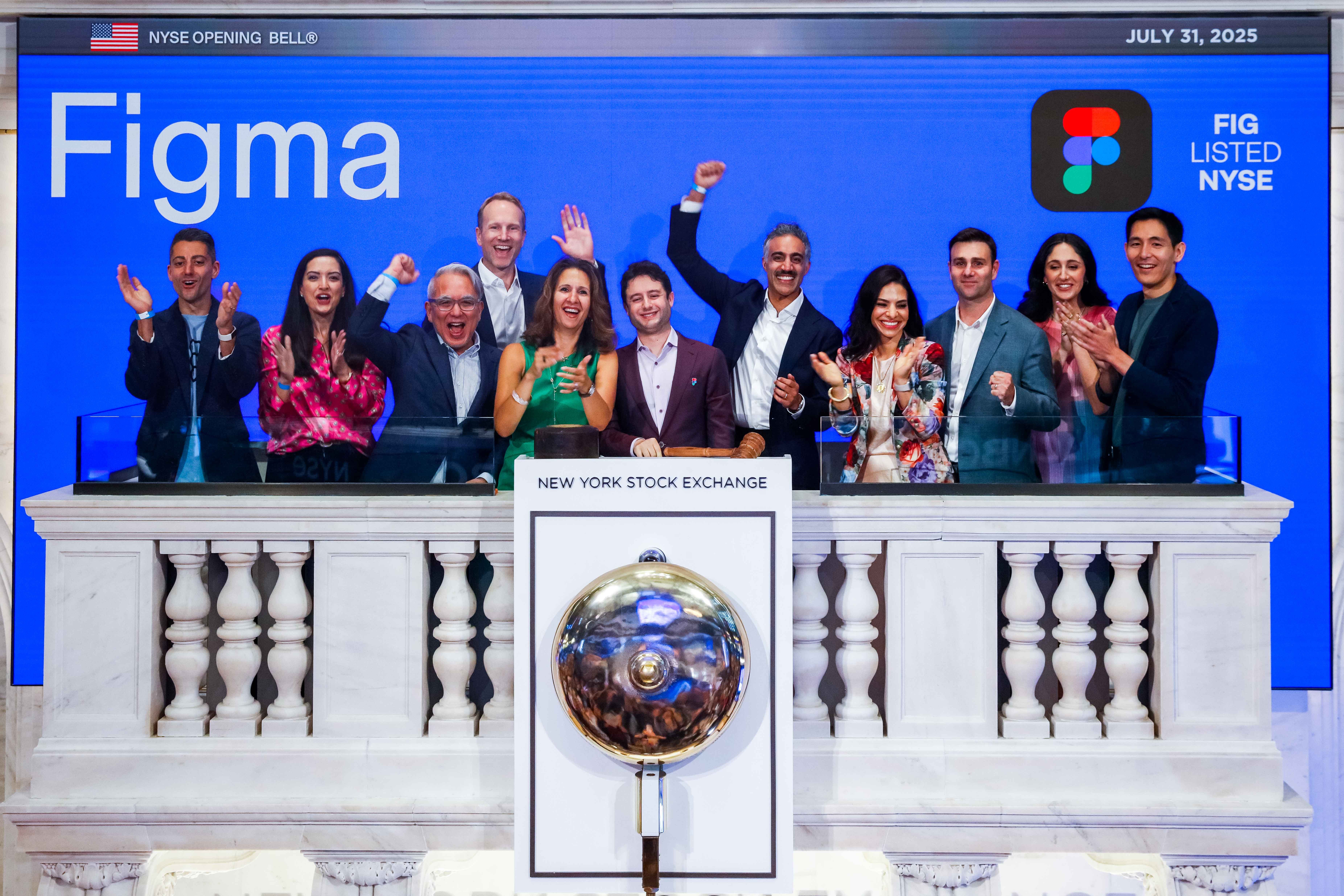
Later this year, Figma went public at a $19.3 billion valuation.